🏢 Provider: JustForTheWin
📅 Released: 4/8/2021
🎯 RTP: 96,1%
⚡ Volatility: High
🧩 Paylines: 10
How to Play Book of King Arthur Slot for Real Money Online

1. RTP (Return to Player): 96.1%
The RTP of 96.1% indicates that, on average, players can expect to recover 96.1 coins for every 100 coins wagered. This figure implies a relatively competitive rate from a player’s perspective; the casino keeps 3.9 coins as its edge. Thus, this RTP is slightly above the industry average, suggesting a favorable environment for players.
2. Paylines: 10
The presence of 10 paylines means that players will have limited combinations to win from compared to games with higher numbers. This structured approach can lead to higher volatility, as wins may come less frequently but could be larger when they do occur.
3. Max Bet Scenario:
When placing the maximum bet of 50, and achieving the maximum win of 5000, the potential return is effectively capped. Assuming you hit the maximum win:
Maximum win: 5000. This is a reasonable figure and can be viewed as feasible within the context of high volatility.
4. Minimum Bet Scenario:
The minimum bet of 0.2 allows for risk-averse players to test the waters. If you played at the minimum bet and achieved the maximum win:
While playing at the minimum bet may yield lower returns due to the cap on maximum payout, such players might focus on long-term engagement or strategy testing.
Simple Expected Return Calculation:
Let’s consider a scenario where a player spins 1,000 times with a 1-coin bet (assuming 0.2 as minimal reference bet) (total wager: 200 coins). Applying the RTP of 96.1%:
That results in an expected loss of 7.8 coins. However, actual returns can vary significantly in real gameplay, especially due to the high volatility nature of this slot.
Risk Evaluation:
The high volatility indicates that while larger wins are possible, the frequency of losses might be greater, leading to streaks without significant payouts. The low number of paylines also adds to this risk, as wins might not be frequent enough to sustain bankroll longevity without optimal bankroll management.
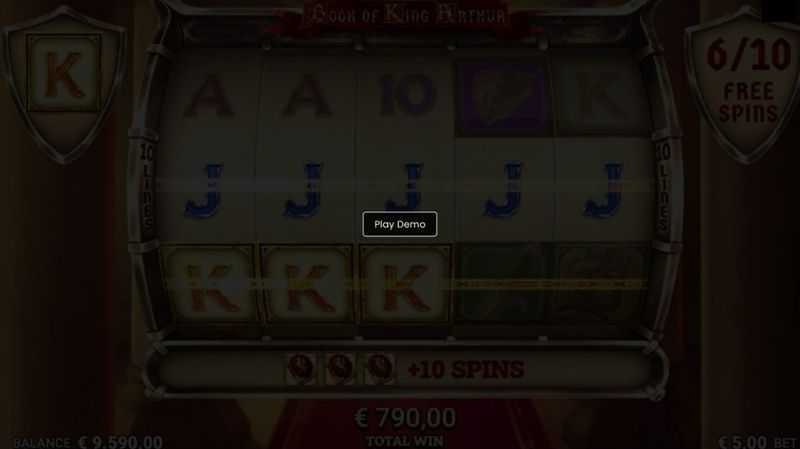
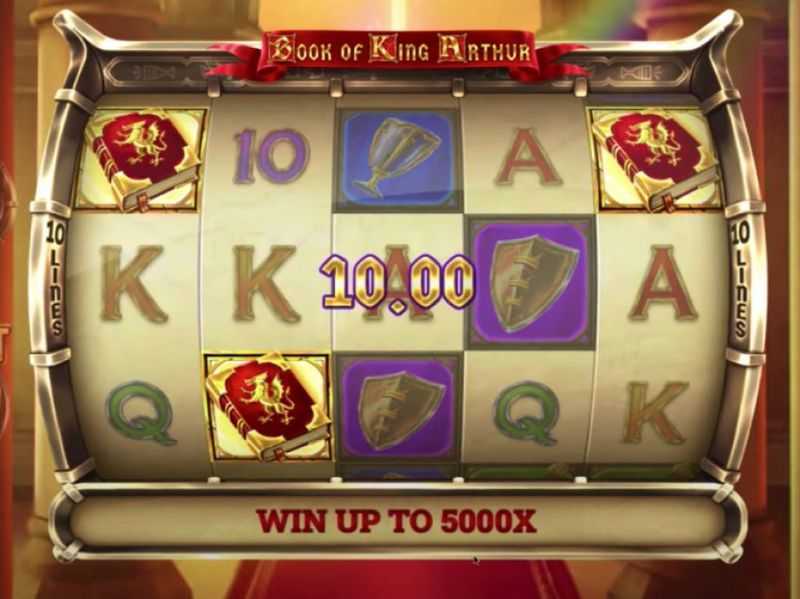
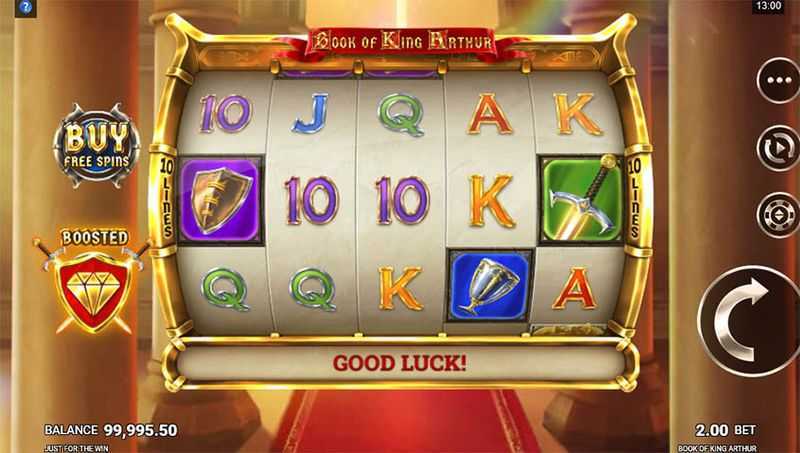
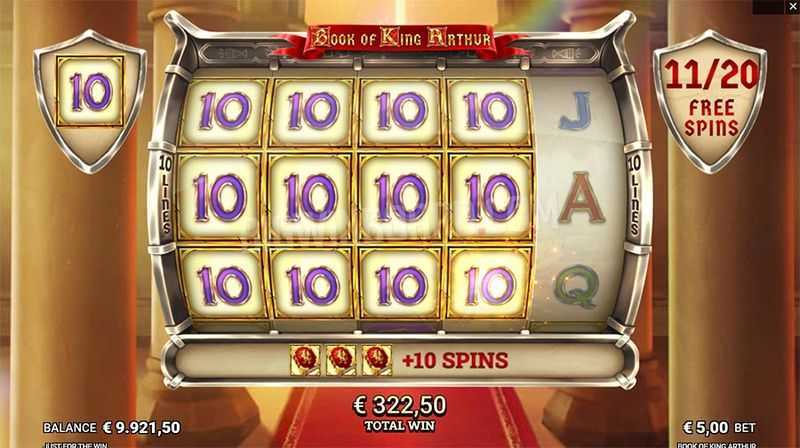
Book of King Arthur Slot Machine – Screenshots